
GR Factory
GR Factory Background & History
GR Factory did not build its place in the replica watch market through broad product coverage. Its development path is closer to that of a factory that first establishes recognition through a small number of difficult, high-visibility references, and then gradually extends into adjacent niche segments. Public discussion shows that GR was first noticed mainly through Patek Philippe Nautilus / Aquanaut models and selected more complex Patek references. By around 2024, it had also clearly expanded into the Vacheron Constantin Overseas line. This shift indicates that GR is not a factory built around a single mainstream steel sports watch, but one that leans towards mid-to-high-end, less common, high-recognition models.
On the Patek side, GR established early recognition not through the simplest three-hand references, but through models such as the 5712, 5711, and 5167, all of which are more sensitive to thickness, dial layout, and movement appearance. Public sources directly connect the GR 5712 with a PP240 clone movement route, while the 5711 and 5167 sit within the most established Nautilus and Aquanaut frameworks. That entry point is revealing, because it shows that GR did not start in Patek through a low-threshold, appearance-only strategy. Its positioning was closer to building differentiation through movement presentation and complication-related visual depth.
Looking more closely at GR’s identity in the Patek segment, its defining feature is not the size of its lineup, but the fact that it selected very direct, highly exposed references. The 5712 is already one of the most closely examined Patek replicas in the market because it involves moonphase, power reserve, small seconds, and an ultra-thin profile. The 5711 and 5167, meanwhile, are core entry points within the Nautilus and Aquanaut families. The fact that GR became associated with these models suggests that it did not build visibility through peripheral pieces, but chose to enter the references most likely to be scrutinized closely. That market position places it naturally closer to the mid-to-high-end range rather than to an ordinary supplementary source.
In more recent developments, one of the clearest changes in GR’s market identity has been its increasing presence in the Vacheron Constantin Overseas segment. Public forum and Reddit discussions show that GR released the 7900V Dual Time, which has already generated visible user feedback and wrist-shot discussion. At the same time, the 4000V has also entered public circulation and real-use conversations. This is highly significant because the Overseas line is not one of the easiest categories to replicate, nor one that scales quickly. It demands a higher level of control over case profile, dial proportion, bracelet integration, and quick-change system execution. GR’s decision to extend in this direction suggests that it is not focused only on the easiest high-volume models, but is continuing to move towards the types of references fewer factories are willing to pursue seriously.
At the same time, the public response to GR’s VC line reflects its real market position quite clearly. On one side, users directly recognize the wearability, overall look, and complete package of the Overseas Dual Time, including its multi-strap configuration. On the other hand, forum discussions also point out issues involving quick-release details, caseback engraving orientation, and date-font execution. That combination is revealing. It shows that GR has already brought the VC line into mainstream discussion, but it is not viewed as a factory without controversy. This balance—being taken seriously while still being openly criticized on details—is often exactly where a mid-to-high-end complex-model factory sits in the real market.
From a factory-logic perspective, GR is not the kind of name built around one single blockbuster model. Its identity has been shaped more by repeatedly choosing harder, more complex, and less commonly covered references, then using those models to create market recognition. In the Patek segment, it worked on the 5712, 5711, and 5167—models that demand stronger control of movement appearance and overall proportion. In the VC segment, it moved into the 7900V Dual Time and 4000V—references that already carry a strong enthusiast following, but are not served by many complete replica versions. This path suggests that GR is not trying to win through volume. It is trying to build position in areas where fewer factories compete, but where successful execution creates clearer distinction.
That also explains why GR’s market reputation is unlikely to be as unified as that of long-established top-tier factories. Any factory working mainly on more complex, more functional, and more structurally demanding models will naturally invite more polarized discussion. Some buyers value the fact that GR is willing to produce references that others avoid. Others focus more on whether every detail is correct, whether the structure is fully faithful, and whether the functions operate with the smoothness expected at this level. In other words, GR’s value does not come from being the most stable or the most mainstream. It comes from continuing to enter the mid-to-high-end complex-reference space and keeping itself relevant inside serious collector discussion.
From a realistic positioning standpoint, GR is best understood as a mid-to-high-end factory that began with complex Patek sports models and later expanded into Vacheron Constantin Overseas. Its strength has never been broad product coverage. Instead, it builds its presence through a small group of high-recognition, higher-difficulty references that fewer factories are willing to approach deeply. A factory like this may not dominate every segment it enters, but once it chooses the right niche, it becomes memorable.
Overall, GR Factory’s background and history can be understood in two stages. The first stage was the development of early recognition through Patek Philippe Nautilus / Aquanaut and the more complex 5712, where movement appearance, thinness control, and complication-driven visual structure helped separate it from more ordinary factories. The second stage was the extension of that same factory logic—working on relatively complex, less common references—into the Vacheron Constantin Overseas segment, where models such as the 7900V and 4000V continued to strengthen its visibility. That development path shows that GR is neither an all-purpose factory nor one built on the easiest mainstream references. It is better understood as a manufacturer oriented towards mid-to-high-end complex themes, building its position gradually through differentiated model selection.
Showing 1–20 of 108 results
-

GF Factory Breitling Avenger Blackbird V17311101B1W1 44mm Titanium Military Canvas Strap Black Dial
$545.00 -
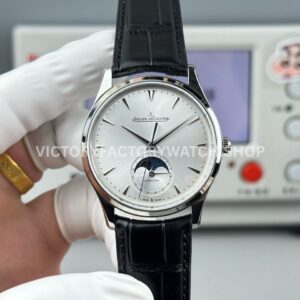
GF Factory Jaeger-LeCoultre Master Ultra Thin Moon Q1258420 39mm Steel Leather Strap Silver Dial
$525.00 -
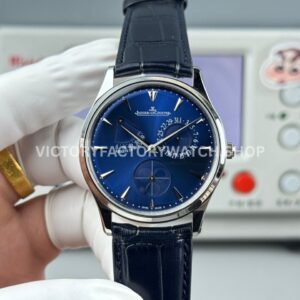
GF Factory Jaeger-LeCoultre Master Ultra Thin Réserve de Marche Q1378480 39mm Steel Leather Strap Blue Dial
$525.00 -

GR Factory Blancpain Villeret Quantième Complet 6654-3642-55B 40mm Rose Gold Leather Strap Roman Numerals White Dial
-
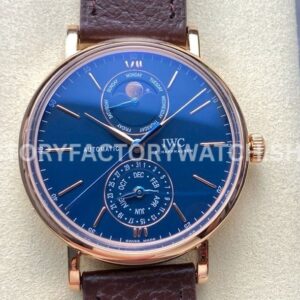
GR Factory IWC Portofino Complete Calendar 41mm Rose Gold Leather Strap Blue Dial
$565.00 -
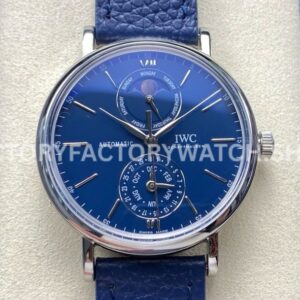
GR Factory IWC Portofino Complete Calendar 41mm Steel Leather Strap Blue Dial
$565.00 -
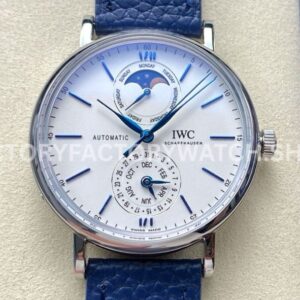
GR Factory IWC Portofino Complete Calendar IW359001 41mm Steel Blue Needle Leather Strap White Dial
$565.00 -
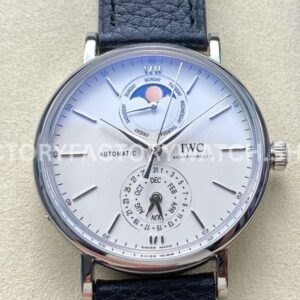
GR Factory IWC Portofino Complete Calendar IW359001 41mm Steel Leather Strap White Dial
$565.00 -
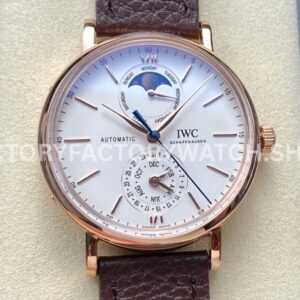
GR Factory IWC Portofino Complete Calendar IW359002 41mm Rose Gold Leather Strap White Dial
$565.00 -
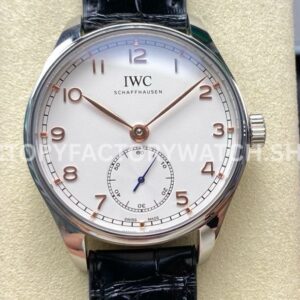
GR Factory IWC Portuguese IW358303 40mm Steel Leather Strap Arabic Numerals Silver Dial
$505.00 -
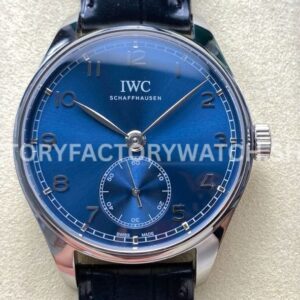
GR Factory IWC Portuguese IW358305 40mm Steel Leather Strap Arabic Numerals Blue Dial
$505.00 -
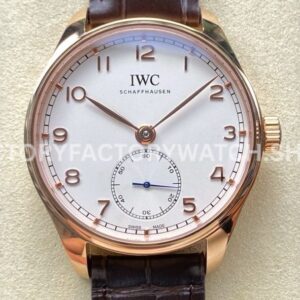
GR Factory IWC Portuguese IW358306 40mm Rose Gold Leather Strap Arabic Numerals White Dial
$505.00 -
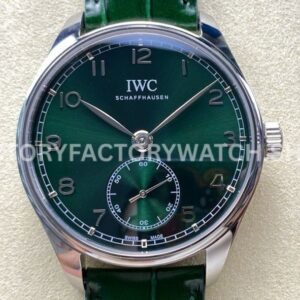
GR Factory IWC Portuguese IW358310 40mm Steel Leather Strap Arabic Numerals Green Dial
$505.00 -
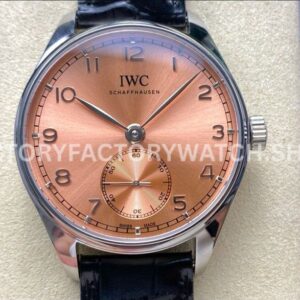
GR Factory IWC Portuguese IW358313 40mm Steel Leather Strap Arabic Numerals Bronze Dial
$505.00 -
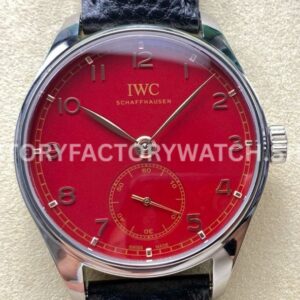
GR Factory IWC Portuguese IW358315 40mm Steel Leather Strap Arabic Numerals Red Dial
$505.00 -
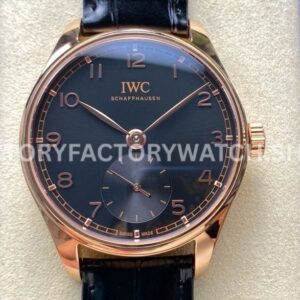
GR Factory IWC Portuguese IW358401 40mm Rose Gold Leather Strap Arabic Numerals Black Dial
$505.00 -
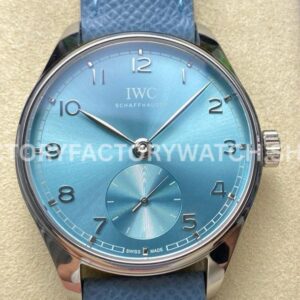
GR Factory IWC Portuguese IW358402 40mm Steel Leather Strap Arabic Numerals Ice Blue Dial
$505.00 -

GR Factory Longines HydroConquest GMT L 3.790.4.96.6 41mm Full Steel Blue Dial
$425.00 -

GR Factory Longines HydroConquest GMT L3.790.4.56.6 41mm Full Steel Black Dial
$525.00 -

GR Factory Longines HydroConquest GMT L3.790.4.66.6 41mm Full Steel Brown Dial
$525.00