

F1 Factory
F1 Factory History, Market Position & Product Analysis
F1 Factory is a specialist manufacturer primarily associated with Cartier watches in the replica watch market. Its most recognizable product lines include the Cartier Tank Must, selected Tank models, and Santos-Dumont watches.
Unlike larger factories that have built their reputation across multiple popular luxury watch brands, F1 Factory has developed a more focused identity. Rather than relying on complicated mechanical movements or highly popular sports watches, its strongest market presence is found in Cartier designs where proportions, typography, case thickness, blued hands, crown dimensions, and overall visual balance matter more than mechanical complexity.
F1 Factory’s market history is best understood through the development of its products and its growing position within Cartier-focused comparisons.
Over time, F1 has become increasingly visible in discussions surrounding the Tank Must and Santos-Dumont, where it is frequently compared with factories such as AF and K11.
Its most accurate market position can therefore be described as:
A Cartier specialist focused primarily on the Tank Must, Tank, and Santos-Dumont, with particular emphasis on proportions and front-facing visual accuracy.
How Did F1 Factory Build Its Market Recognition?
The Cartier Tank Must has played an important role in establishing F1 Factory’s reputation.
At first glance, the Tank Must appears extremely simple.
A rectangular case, Roman numerals, minute track, blued sword-shaped hands, crown, and leather strap make up almost the entire visual design.
However, this simplicity makes the watch surprisingly difficult to reproduce accurately.
There are few decorative elements available to hide mistakes.
If the Cartier logo is too thick, the Roman numerals are incorrectly spaced, the case is slightly too long or wide, the crown is oversized, or the strap proportions are incorrect, the difference becomes immediately noticeable.
F1 Factory gained recognition because some of its Tank Must versions achieved a relatively balanced execution of these fundamental details.
In recent market discussions, the F1 Tank Must Large has been compared directly with AF and K11 versions.
Some buyers prefer F1 because of details such as the CARTIER logo typography, the hidden signature around the VII numeral, and the overall balance of the dial. Others consider the differences between F1 and AF relatively small and prefer to judge the watches according to the current production batch.
This reflects F1 Factory’s actual competitive position:
F1 does not dominate every Cartier category, but in the Tank Must segment it has become one of the factories worth comparing at the higher end of the market.
F1 Factory’s Market Position
F1 Factory is best positioned as:
A mid-to-high-end Cartier specialist with particular strengths in the Tank Must, selected Tank references, and Santos-Dumont models.
Its competitive strategy differs significantly from factories specializing in complicated mechanical watches.
Many genuine Cartier Tank watches use quartz movements.
For example, classic Tank Must references are designed around extremely thin cases, making dimensions and proportions more important than mechanical complexity.
For an F1 Tank, the most important evaluation points include:
* Case dimensions
* Case thickness
* Dial typography
* Roman numeral proportions
* Blued-hand appearance
* Crown size
* Strap width
* Overall front-facing balance
This product philosophy aligns closely with F1 Factory’s strongest characteristics.
F1 Factory Cartier Tank Must
The Tank Must is one of the most representative product lines associated with F1 Factory.
The Cartier Tank design dates back to 1917 and is defined by its rectangular architecture, vertical brancards, Roman numerals, railway-style minute track, blued hands, and distinctive crown.
The Tank Must continues this classic design language while maintaining a very thin and elegant profile.
For replica versions, several details are particularly important.
Case Proportions
A Cartier Tank cannot be reproduced accurately simply by making a rectangular watch.
The relationship between case length and width must be correct.
If the case is too long, the watch begins to resemble a generic rectangular dress watch.
If it is too wide, it loses the elegant and elongated character associated with the Tank.
One reason F1 has gained recognition in selected Tank Must references is the relatively balanced appearance of its overall case and dial proportions.
Cartier Logo Typography
Because the Tank dial is extremely clean, the CARTIER logo becomes particularly important.
Letter thickness, spacing, size, and positioning are all visible.
Comparisons between AF, K11, and F1 frequently focus on this detail.
Some versions from competing factories have been criticized for thicker lettering or slightly different spacing, while F1 has received positive attention for the visual balance of the logo on certain Tank Must Large versions.
This does not mean every F1 production batch is automatically superior.
It does mean typography is one of the areas where F1 has established genuine competitive relevance.
Roman Numerals and Hidden Signature
Large Roman numerals are one of the defining characteristics of the Cartier Tank.
The numerals must maintain the correct thickness and spacing.
The small hidden CARTIER signature integrated around the VII numeral is another detail frequently examined by enthusiasts.
Because the dial contains relatively few elements, typography errors are more visible than they would be on a complicated sports watch.
Blued Hands
Cartier’s blued hands should not simply look like bright blue paint.
Under different lighting conditions, well-executed hands can shift visually between deep blue, dark blue, and almost black.
Hands that remain excessively bright blue under every lighting condition can appear artificial.
For an F1 Tank Must, hand color is therefore an important detail to inspect alongside the dial typography.
F1 Factory Santos-Dumont
Another important product direction associated with F1 Factory is the Cartier Santos-Dumont.
Although the Santos-Dumont and Santos de Cartier share the Santos name, their design philosophies are different.
The Santos-Dumont is generally thinner, more elegant, and more closely associated with traditional dress-watch styling, often paired with a leather strap.
The Santos de Cartier has a more contemporary sports-luxury identity, particularly through its integrated bracelet construction and more substantial case design.
F1 has gained some market recognition for Santos-Dumont versions, where its strengths align well with the design requirements of the watch.
Important details include:
* Square case proportions
* Bezel geometry
* Roman numeral layout
* Blued hands
* Crown dimensions
* Case thickness
* Strap width
* Clasp proportions
As with the Tank, mechanical complexity is not the primary challenge.
The key is achieving the correct proportions.
This makes the Santos-Dumont a logical product category for F1 Factory.
F1 Factory and the Ballon Bleu
The F1 name may also appear in connection with other Cartier watches, but the Ballon Bleu is not its clearest area of specialization.
Historically, factories such as AF and V6 have developed stronger recognition within the Ballon Bleu market.
The Ballon Bleu also requires a very different manufacturing approach.
Its identity depends heavily on:
* Rounded case geometry
* Crown guard curvature
* Cabochon-style crown construction
* Curved crystal profile
* Guilloché-style dial
* Bracelet integration
For this reason, strong performance in the Tank category does not automatically mean F1 should be considered the strongest choice for the Ballon Bleu.
Each Cartier collection requires a separate evaluation.
Movement Configuration
Many of F1 Factory’s representative Cartier models use quartz movements.
This should not automatically be considered a disadvantage.
For watches such as the Tank Must and selected Santos-Dumont references, quartz movements can help maintain the thin case dimensions that are essential to the original design.
A common mistake is assuming that an automatic movement always represents a higher-quality watch.
For Cartier, this is not necessarily true.
If the corresponding genuine reference uses quartz, a stable quartz movement may actually be the more appropriate configuration.
The correct questions should be:
* Is the movement stable?
* Does the watch maintain the correct thickness?
* Does the setting system operate properly?
* Does the movement configuration match the intended reference?
* Is battery replacement straightforward?
For thin Cartier watches, accurate dimensions and reliable operation are often more important than unnecessary mechanical complexity.
Main Advantages of F1 Factory
F1 Factory’s greatest advantage is its ability to compete in Cartier’s minimalist designs.
Its main strengths include:
* Strong market recognition for selected Tank Must models
* Competitive dial typography
* Balanced front-facing proportions
* Quartz configurations appropriate for selected genuine references
* Thin case construction
* Growing recognition within the Santos-Dumont category
* Good suitability for smaller and dress-oriented Cartier watches
One of the most important aspects of F1 Factory is that it operates in a category where mistakes are difficult to hide.
A Cartier Tank does not have a complicated bezel, multiple subdials, or an exposed movement to distract the eye.
A wrong font, incorrect hand length, oversized crown, or poor case proportion can immediately affect the entire appearance.
The fact that F1 has become a serious comparison option alongside AF and K11 in this category gives it genuine market relevance.
Limitations of F1 Factory
F1 Factory should not automatically be considered the strongest manufacturer for every Cartier collection.
The Tank Must is one of its clearest competitive areas.
The Santos-Dumont also has meaningful market recognition.
However, Ballon Bleu, Santos de Cartier, Panthère, and other Cartier collections require separate comparisons with factories that specialize more strongly in those models.
Another important consideration is size.
A strong Tank Must Large does not automatically mean the Small version will have exactly the same strengths.
Dial proportions, crown dimensions, strap width, and typography can change visually between sizes.
F1 also competes very closely with AF and K11.
The differences are often subtle rather than dramatic.
For this reason, choosing a Cartier Tank is better approached through detailed model comparison rather than relying on a simple factory ranking.
F1 Factory vs AF Factory
One of the most important comparisons for F1 is AF Factory.
Both factories compete within parts of the Cartier Tank market.
AF has a longer and broader reputation across Cartier, particularly through the Ballon Bleu and selected Tank models.
F1 has gained increasing attention through newer Tank Must versions, especially the Large configuration.
Some buyers prefer F1 because of:
* CARTIER logo typography
* Hidden signature execution
* Overall dial balance
AF, however, remains highly competitive, and differences can change between production generations.
A practical conclusion is:
For the Cartier Tank Must, both F1 and AF should be included in the final comparison. For the Ballon Bleu, AF has a stronger historical market position.
F1 Factory vs K11 Factory
K11 is another important competitor within the Cartier Tank market.
Comparisons often focus on:
* Logo typography
* Roman numeral spacing
* Case dimensions
* Dial proportions
* Crown size
* Hand length
Some buyers consider F1 more visually balanced in selected versions, while K11 may perform better in other references or sizes.
There is no universal answer that applies to every Cartier Tank.
The correct comparison should involve:
* The same reference
* The same case size
* The same dial configuration
* The same movement type
* The current production batch
For minimalist watches such as the Tank, current production quality can matter as much as factory reputation.
Who Should Consider F1 Factory?
F1 Factory is particularly suitable for buyers who:
* Like the Cartier Tank Must
* Care about front-facing dial proportions
* Pay close attention to Cartier logo typography
* Prefer thin dress watches
* Are comfortable with quartz movements where appropriate
* Like the Santos-Dumont
* Prioritize exterior design over complicated mechanics
* Are willing to compare current production details
F1 is particularly relevant for buyers who understand Cartier’s design philosophy.
The sophistication of a Cartier watch often comes from:
* Proportion
* Negative space
* Typography
* Blued hands
* Thinness
* Crown design
These apparently simple elements determine much of the watch’s character.
Practical Buying Advice
When evaluating an F1 Tank Must, buyers should inspect:
* CARTIER logo thickness
* Hidden signature around VII
* Roman numeral spacing
* Minute track alignment
* Blued-hand color
* Crown dimensions
* Case length-to-width ratio
* Case thickness
* Strap-to-case fit
* Clasp quality
For an F1 Santos-Dumont, important areas include:
* Square case proportions
* Bezel geometry
* Roman numeral printing
* Blued hands
* Crown construction
* Case thickness
* Strap width
* Clasp proportions
If the watch uses quartz, it should not automatically receive a lower evaluation.
Instead, buyers should confirm stable timekeeping, correct case thickness, easy maintenance, and accurate exterior proportions.
Final Assessment
F1 Factory has developed a clear position within the Cartier replica watch market.
Its most representative product is the Tank Must, while selected Santos-Dumont models have also contributed to its reputation.
F1’s strongest qualities are not based on complicated mechanical technology.
Its competitive value comes from some of the details that matter most in minimalist Cartier watches:
* Dial proportions
* Logo typography
* Roman numerals
* Blued hands
* Case thickness
* Overall front-facing balance
Its limitations are equally clear.
F1 is not automatically the strongest factory for every Cartier collection, and differences between F1, AF, and K11 often require careful inspection of the exact model and current production generation.
The most accurate conclusion is:
F1 Factory is a mid-to-high-end Cartier specialist whose strongest market position is built around the Tank Must and selected Santos-Dumont models, with particular emphasis on proportions and visual accuracy.
For the Tank Must, F1 is one of the factories worth prioritizing in a direct comparison.
For the Ballon Bleu, AF and other established versions should receive stronger consideration.
For other Cartier collections, the factory choice should be evaluated again according to the specific reference.
F1’s real value is not where it ranks on a generic factory list.
Its value comes from its ability, in selected Cartier models, to reproduce the subtle proportions and visual details that define the original design.
Showing all 11 results
-

F1 Factory Cartier Santos Dumont W2SA0011 31.4mm Rose Gold Bezel Leather Strap Roman Numerals Silver Dial
$435.00 -
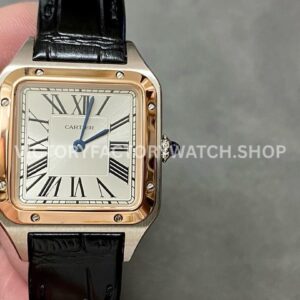
F1 Factory Cartier Santos Dumont W2SA0012 27.5mm Rose Gold Bezel Leather Strap Roman Numerals Silver Dial
$435.00 -
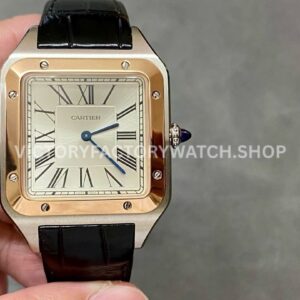
F1 Factory Cartier Santos Dumont W2SA0017 33.9mm Rose Gold Bezel Leather Strap Roman Numerals Silver Dial
$435.00 -

F1 Factory Cartier Santos Dumont WGSA0022 27.5mm Rose Gold Leather Strap Roman Numerals Silver Dial
$435.00 -

F1 Factory Cartier Santos Dumont WGSA0032 33.9mm Rose Gold Leather Strap Roman Numerals Silver Dial
$435.00 -

F1 Factory Cartier Santos Dumont WGSA0077 31.4mm Yellow Gold Leather Strap Roman Numerals Black Dial
$435.00 -

F1 Factory Cartier Santos Dumont WHSA0021 31.4mm Rose Gold Leather Strap Roman Numerals Silver Dial
$435.00 -
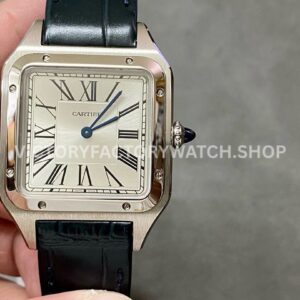
F1 Factory Cartier Santos Dumont WSSA0022 31.4mm Steel Leather Strap Roman Numerals Silver Dial
$435.00 -

F1 Factory Cartier Santos Dumont WSSA0023 27.5mm Steel Leather Strap Roman Numerals Black Dial
$435.00 -
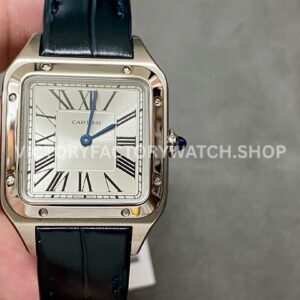
F1 Factory Cartier Santos Dumont WSSA0023 27.5mm Steel Leather Strap Roman Numerals Silver Dial
$435.00 -

F1 Factory Cartier Santos Dumont WSSA0032 33.9mm Steel Leather Strap Roman Numerals Silver Dial
$435.00