

BBA Factory
BBA Factory Background
Public information on BBA Factory is not especially dense, but based on the forum discussions, retail classifications, user wrist shots, and product-circulation traces that continue to appear, its market identity has gradually become clearer. Unlike factories that build recognition through popular men’s steel sports watches, BBA’s most stable public associations are concentrated around Cartier Panthère and Cartier Baignoire, both of which belong more to the world of women’s jewelry watches and small-size dress pieces. At the same time, BBA has also left a continued trace in another subject that appears very different on the surface but follows a similar aesthetic logic: the Richard Mille RM07-01. This product distribution is already enough to show that BBA is not a factory built around broad coverage of mainstream sports watches, but rather a source that has gradually formed a market label through feminine, small-size, jewelry-driven, and highly distinctive watch themes.
Within the Cartier line, the clearest market recognition attached to BBA is the Panthère de Cartier. Public materials show that BBA’s presence in the Panthère segment has become visible enough to appear in community “Who Makes the Best” style summaries, which means it is not a name that exists only in seller-side product titles. It has already entered the collector comparison framework in a relatively stable way. Retail listings also consistently connect BBA to white-dial, black-dial, diamond-bezel, and small quartz Panthère versions. This shows that its role in the Cartier segment is not vague at all. It is specifically concentrated on small-size, jewelry-oriented, quartz-powered classic women’s watch themes.
Beyond the Panthère, BBA has also formed a visible and continuous presence in the Cartier Baignoire segment. In recent Baignoire comparison threads on RWI, BBA appears alongside factories such as AF and DRF in the same discussion structure. That means the market is not treating BBA as a random or invented label, but as a real participant in the Baignoire niche. Public feedback includes discussion of dial effect, timekeeping stability, and finishing details, but also of case shape, visual balance, and wearing presence. The fact that this kind of comparison continues to exist—with both praise and criticism—is exactly what makes BBA’s position more credible. It shows that BBA has entered a real environment of purchase and comparison in the Cartier women’s segment, rather than remaining only as a name on a listing page.
From a market-logic perspective, BBA’s factory character in the Cartier route is not technical in the traditional sense. It is more strongly aligned with appearance, size, wearing atmosphere, and jewelry-style presentation. Whether in the Panthère or the Baignoire, these are not watches that win through movement complexity. They depend far more on case proportion, the refinement of bracelet or bezel execution, dial texture, and whether the overall impression on the wrist feels convincing. BBA continues to be mentioned in these subjects not because it is tied to some widely discussed mechanical advantage, but because it has built visibility in categories where instinctive visual judgment matters most. For that reason, BBA’s factory identity is not likely to be built around movement, functionality, or generation-by-generation technical iteration in the same way traditional men’s sports-watch factories are. It is much closer to a product-oriented factory built around small-size jewelry-watch themes.
At the same time, another very visible market trace linked to BBA is the Richard Mille RM07-01. Public discussions have already connected BBA to this reference, while retail and review-style content repeatedly associates it with RM07-01 Japanese limited editions, ceramic cases, and skeleton-upgrade expressions. On the surface, this line looks very different from Cartier, but in market logic it is actually consistent. The RM07-01 is also a feminine, jewelry-oriented, and highly visually recognizable subject, one that depends heavily on case material expression, color language, and strong overall visual presence. The fact that BBA has built public circulation around this reference shows that its factory logic is not centered on classic men’s steel sports watches, but on watches that have strong aesthetic expression, more unusual dimensions, and very distinctive visual identity.
When the Cartier and Richard Mille lines are considered together, BBA’s real market character becomes much clearer. It does not show the kind of explicit “technical factory” identity associated with names such as VS, ZF, or APS, nor has it formed a long-running public narrative around repeated version upgrades of a single hot men’s reference. Instead, it is better understood as a factory that has built presence around the women’s market, small-size watches, jewelry-style expression, and strong visual themes. The Panthère, the Baignoire, and the RM07-01 belong to different brands, but from a market standpoint they are highly similar: all rely far more on finishing, style, jewelry presence, and strong visual identity than on complicated mechanical logic. The fact that BBA continues to appear in these kinds of references suggests that its factory direction is not random or scattered. There is a fairly clear aesthetic and subject-driven line holding it together.
From an industry-position standpoint, BBA should not be defined as a broad all-purpose top factory, nor reduced to an ordinary low-end source. A more accurate understanding is to place it as a low- to mid-visibility specialist factory that continues to maintain market presence in women’s jewelry watches and high-recognition feminine references. Its public visibility does not depend on long-running forum mythology, but more on retail circulation, user wrist-shot sharing, and community recognition of which factory most commonly appears in certain niche subjects. That kind of factory is actually very common and very real in the replica market, because not every manufacturer needs to build its identity through the hottest men’s sports watches. Some establish their position precisely by focusing on less crowded, more aesthetically specific categories.
From a background-and-history perspective, the most accurate definition of BBA Factory is not that of a general factory pushing mainstream steel sports watches, but that of a manufacturer that gradually built market recognition through feminine, highly recognizable subjects such as Cartier Panthère, Cartier Baignoire, and Richard Mille RM07-01. Its market presence was not formed through broad coverage or technical mythology, but through the continued circulation of small-size jewelry watches and visually striking women’s references. That kind of factory path may not be high-profile, but it is far closer to the real market than vague descriptions suggesting that it “does everything,” and it fits much more closely with the actual circulation logic of this part of the replica watch industry.
Showing 1–20 of 23 results
-
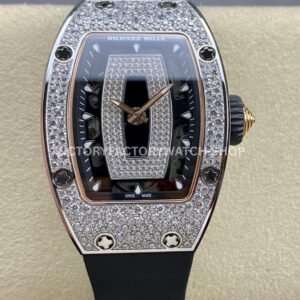
BBA Factory Richard Mille RM 07 31.4mm Diamond Bezel Black Rubber Strap Skeletonized Black Dial
$725.00 -

BBA Factory Richard Mille RM 07 31.4mm Diamond Bezel Black Rubber Strap Skeletonized Red Dial
$725.00 -

BBA Factory Richard Mille RM 07 31.4mm Diamond Bezel White Rubber Strap Skeletonized Black Dial
$725.00 -

BBA Factory Richard Mille RM 07 31.4mm Diamond Bezel White Rubber Strap Skeletonized Red Dial
$725.00 -
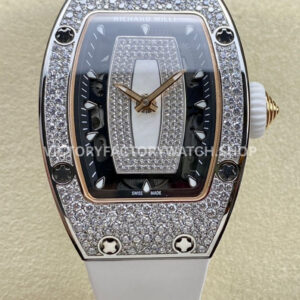
BBA Factory Richard Mille RM 07 31.4mm Diamond Bezel White Rubber Strap Skeletonized White Dial
$725.00 -
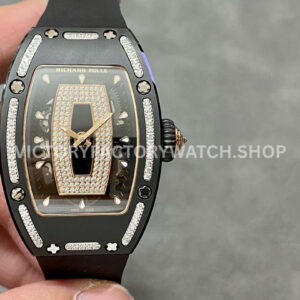
BBA Factory Richard Mille RM 07 31.4mm Diamond Black Ceramic Black Rubber Strap Skeletonized Black Dial
$695.00 -

BBA Factory Richard Mille RM 07 31.4mm Diamond Black Ceramic Black Rubber Strap Skeletonized Red Dial
$695.00 -
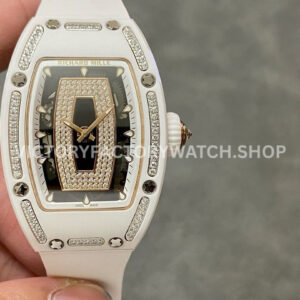
BBA Factory Richard Mille RM 07 31.4mm Diamond White Ceramic White Rubber Strap Skeletonized Black Dial
$695.00 -

BBA Factory Richard Mille RM 07 31.4mm Diamond White Ceramic White Rubber Strap Skeletonized Red Dial
$695.00 -
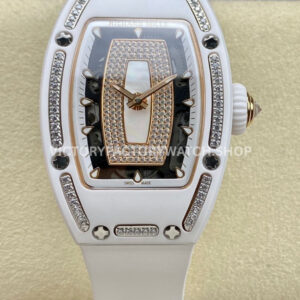
BBA Factory Richard Mille RM 07 31.4mm Diamond White Ceramic White Rubber Strap Skeletonized White Dial
$695.00 -
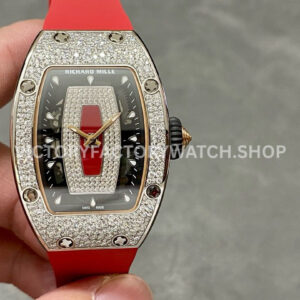
BBA Factory Richard Mille RM 07 31.4mm Diamond White Gold Red Rubber Strap Skeletonized Black Dial
$725.00 -

BBA Factory Richard Mille RM 07 31.4mm Rose Gold Black Rubber Strap Skeletonized Black Dial
$695.00 -
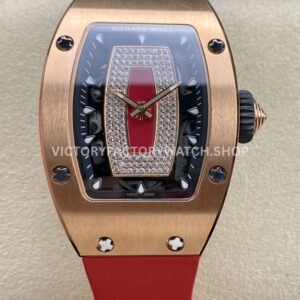
BBA Factory Richard Mille RM 07 31.4mm Rose Gold Red Rubber Strap Skeletonized Red Dial
$695.00 -

BBA Factory Richard Mille RM 07 31.4mm Steel Black Rubber Strap Skeletonized Black Dial
$695.00 -
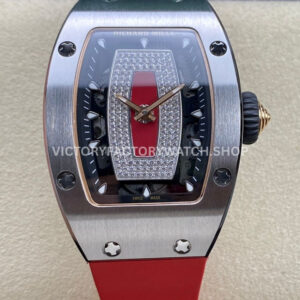
BBA Factory Richard Mille RM 07 31.4mm Steel Red Rubber Strap Skeletonized Red Dial
$695.00 -
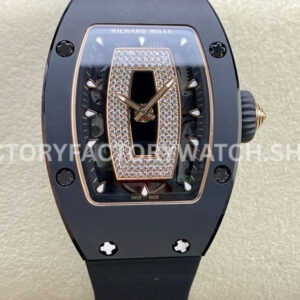
BBA Factory Richard Mille RM 07 31.4mm Titanium Black Ceramic Black Rubber Strap Skeletonized Black Dial
$695.00 -
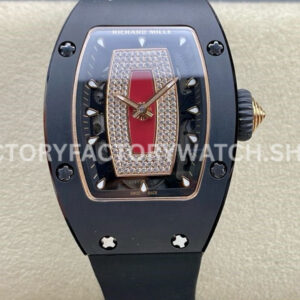
BBA Factory Richard Mille RM 07 31.4mm Titanium Black Ceramic Black Rubber Strap Skeletonized Black Dial
$695.00 -
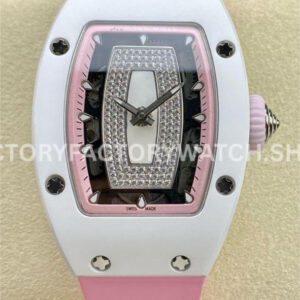
BBA Factory Richard Mille RM 07 31.4mm Titanium White Ceramic Pink Rubber Strap Skeletonized Pink Dial
$695.00 -
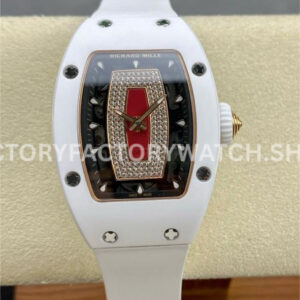
BBA Factory Richard Mille RM 07 31.4mm Titanium White Ceramic White Rubber Strap Skeletonized Black Dial
$695.00 -

BBA Factory Richard Mille RM 07 31.4mm Titanium White Ceramic White Rubber Strap Skeletonized Blue Dial
$695.00