
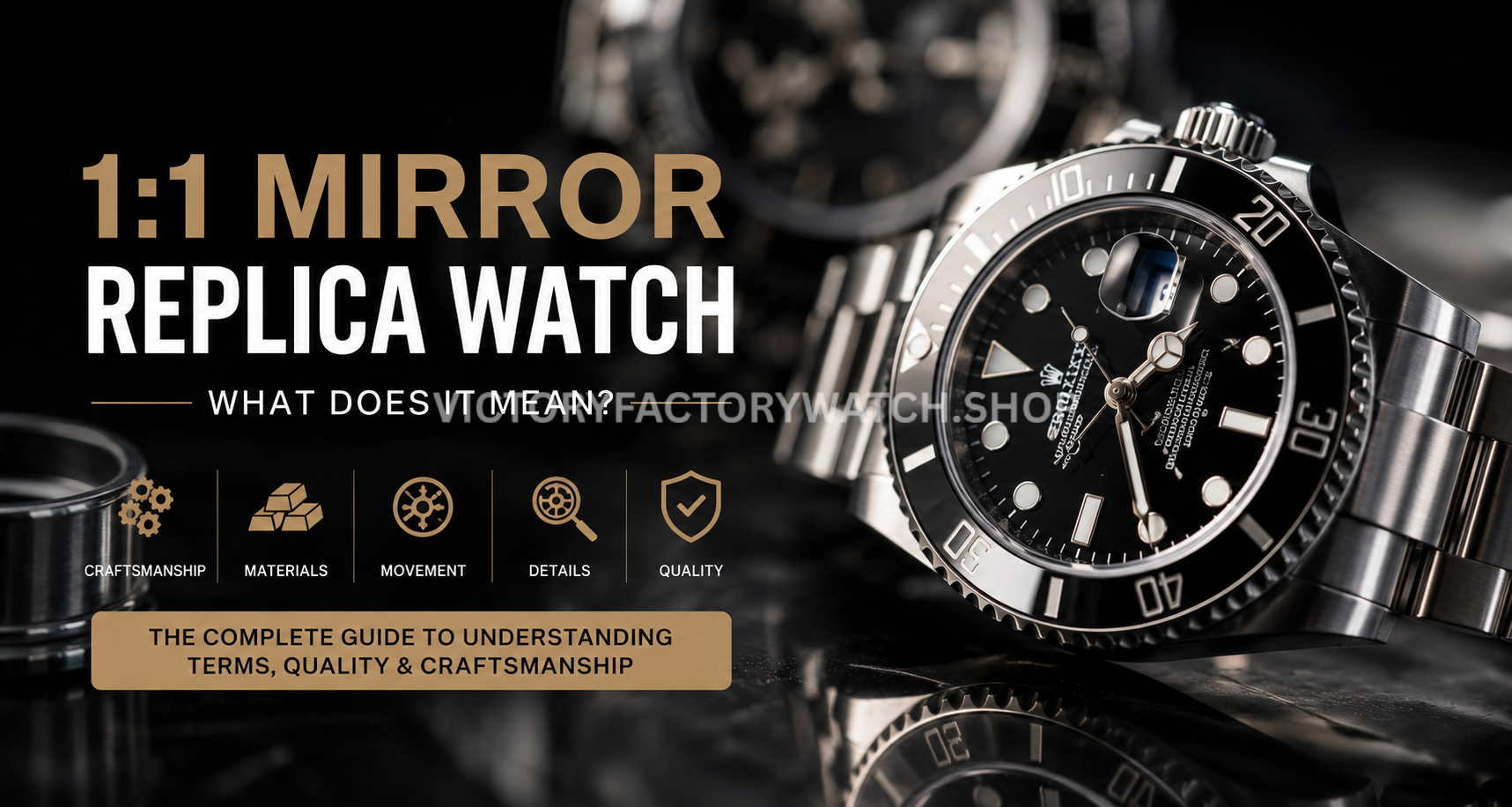
What Does “1:1 Mirror Replica Watch” Mean? A Complete Guide to the Term, Craftsmanship, and Common Misconceptions
If you have searched online for watch-related information, you may have come across phrases such as “1:1 mirror replica watch” or “1:1 replica watch in US.” These expressions are commonly used in online discussions and marketing materials, but many readers are unsure what they actually mean.
The important point is that “1:1” and “mirror” are not official watchmaking standards. Instead, they are informal descriptions intended to suggest that a product aims to resemble another design in appearance or proportion. Because there is no universally accepted definition, the meaning can vary depending on who is using the term.
This guide explains the terminology, explores the factors that enthusiasts examine when evaluating watch craftsmanship, and highlights why objective specifications matter more than marketing language.
Why Is This Guide Written for US Readers?
Interest in 1:1 mirror replica watches has grown significantly among watch enthusiasts across the United States. Search terms such as “1:1 replica watch US” and “best replica watches in America” continue to appear in online searches as collectors look for educational information about watch craftsmanship and terminology.
This guide is written specifically with the US audience in mind, explaining the meaning behind these commonly used expressions while focusing on objective watchmaking characteristics rather than promotional language.
Is “1:1 Mirror Replica Watch” an Official Classification?
The traditional watch industry does not recognize “1:1 mirror” as a certified grade or technical specification. Professional manufacturers, engineers, and watchmakers typically describe products using measurable characteristics such as case diameter, movement type, crystal material, water resistance, or finishing techniques.
As a result, two watches promoted with the same “1:1 mirror” description may differ significantly in materials, assembly quality, precision, and long-term durability.
What Does “1:1” Usually Refer To?
In online communities, the phrase “1:1” is often used to suggest that a watch attempts to closely match another design in terms of:
- Overall dimensions
- Case proportions
- Dial layout
- Hand placement
- Bezel appearance
- Bracelet styling
- External visual details
However, the label alone does not verify manufacturing accuracy or quality. Careful evaluation of specifications and craftsmanship provides a more reliable basis for comparison.
Why the Word “Mirror” Is Used
The word “mirror” is generally intended to imply a high level of visual resemblance. It is primarily descriptive and promotional rather than technical.
Since there is no independent standard defining “mirror quality,” consumers should interpret the term cautiously and look beyond advertising language when researching watches.
How Experienced Enthusiasts Evaluate Watch Craftsmanship
Collectors and reviewers often pay attention to objective characteristics instead of marketing claims. Common evaluation points include:
Case Finishing
The quality of polishing, brushing, and edge transitions can reveal the level of manufacturing consistency and attention to detail.
Dial and Printing
Well-produced dials typically feature clean text, precise markers, balanced spacing, and consistent finishing under magnification.
Crystal Material
Many higher-end watches use sapphire crystal for its scratch resistance and optical clarity, while other models may use different materials depending on design goals and price range.
Bracelet Construction
Comfort, articulation, machining tolerances, and clasp operation all contribute to the overall user experience.
Movement Performance
Movement architecture, assembly quality, reliability, and long-term servicing requirements are often more significant than external appearance alone.
Common Misconceptions
“1:1” does not guarantee identical construction.
The phrase is descriptive rather than standardized, and products carrying the label can vary widely.
“Mirror quality” is not independently certified.
There is no universal testing organization that verifies whether a watch qualifies as “mirror.”
Marketing terms should not replace technical evaluation.
Dimensions, materials, finishing quality, and movement specifications offer more meaningful information than promotional wording.
Why These Terms Remain Popular
Search interest in phrases like “1:1 mirror replica watch” reflects consumer curiosity about manufacturing terminology and visual design comparisons. Online forums, social media discussions, and marketplace listings have contributed to the widespread use of these expressions.
For readers researching watch craftsmanship, understanding the limitations of such terminology helps separate marketing language from measurable product characteristics.
Why Is “1:1 Mirror Replica Watch” Popular in the United States?
Over the past several years, interest in luxury watch craftsmanship has continued to grow across the United States. Many American collectors enjoy learning about case finishing, automatic movements, bracelet construction, and other aspects of watch engineering before making comparisons.
As a result, search phrases such as “1:1 mirror replica watch USA,” “best replica watch US,” and “high quality replica watch America” have become increasingly common in search engines and online watch communities.
For many US readers, these searches are less about understanding marketing terminology and more about learning how experienced enthusiasts evaluate craftsmanship, finishing quality, and overall design accuracy.
Frequently Asked Questions for US Readers
Is “1:1 Mirror Replica Watch USA” different from other countries?
The phrase itself carries the same informal meaning regardless of location. However, search trends in the United States often focus more on craftsmanship, materials, movement quality, and overall watch construction rather than simply marketing terminology.
Why do so many people search for “1:1 Replica Watch USA”?
Many American watch enthusiasts use this search phrase when researching watch designs, manufacturing quality, and terminology before comparing different options online.
Are “1:1” and “mirror” official watch industry standards in the US?
No. Just like elsewhere, these expressions are not recognized as official classifications within the professional watchmaking industry.
Is “1:1” an official industry grading system?
No. It is an informal expression rather than a recognized technical classification.
Does “mirror” indicate certified quality?
No. The term does not have a universally accepted engineering definition or certification process.
What should buyers focus on instead?
Objective details such as dimensions, materials, movement type, finishing quality, and transparent product specifications generally provide a clearer understanding of a watch than descriptive marketing labels.
Thoughts
The phrase “1:1 mirror replica watch” has become a familiar part of online watch-related discussions, but it should be understood as informal terminology rather than an official watchmaking standard. Whether researching designs, comparing craftsmanship, or learning industry vocabulary, readers benefit from focusing on verifiable specifications and observable construction quality instead of relying solely on promotional descriptions.
Developing a basic understanding of watch engineering, finishing techniques, and movement design provides a stronger foundation for evaluating products and interpreting the language commonly encountered across the watch market.
Learning More About Watch Craftsmanship and Design
For readers who want to go beyond marketing terminology, studying real-world watch construction and manufacturing details can provide a much clearer understanding of quality and design.
At VictoryFactoryWatch, the focus extends beyond product descriptions to educational resources that explore topics such as case finishing, movement types, crystal materials, bracelet construction, and the finer details that influence the overall appearance and wearing experience of a watch.
Whether you are researching common industry terminology or comparing different manufacturing techniques, reviewing in-depth guides and technical explanations can help you make more informed evaluations based on objective characteristics rather than promotional language alone.
You may also find it useful to explore related resources covering automatic movements, stainless steel grades, sapphire crystal technology, watch maintenance, and craftsmanship comparisons to build a broader understanding of modern watch design.
Learn more about the best victory factory watch website in US.